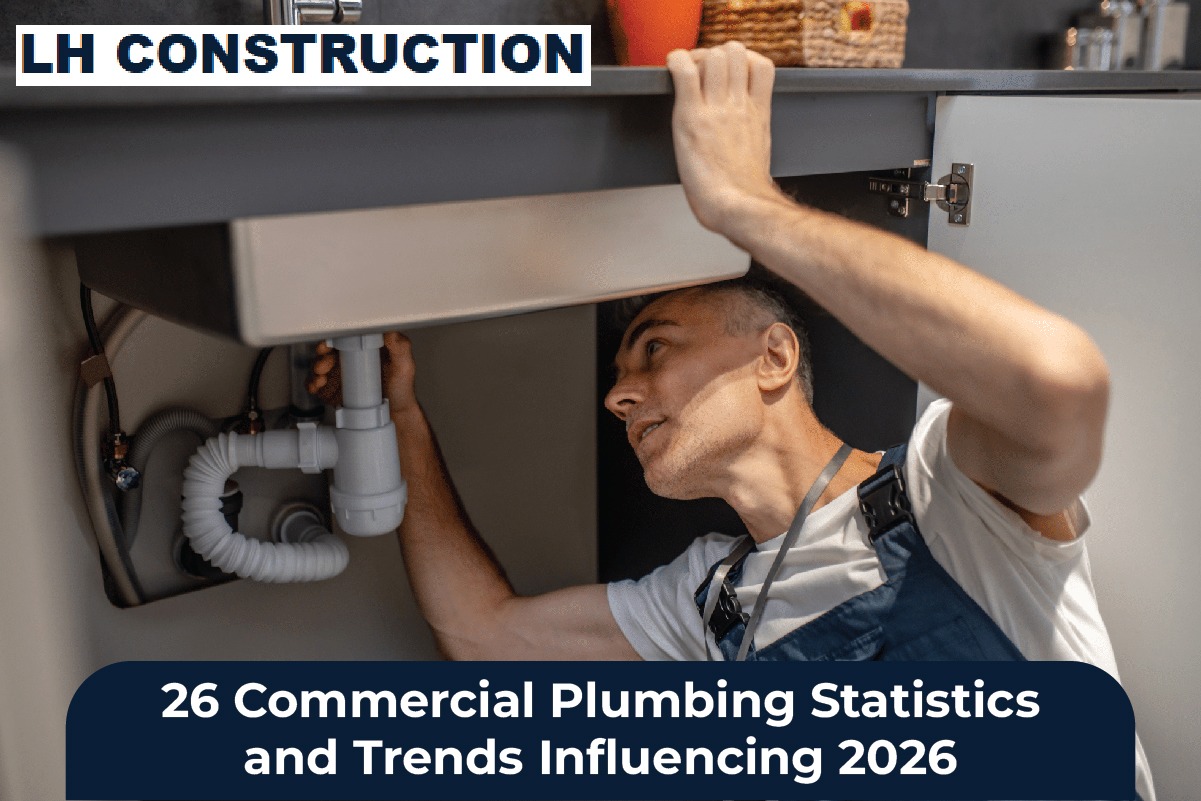
Thinking about your next renovation, commercial build-out, or long-term service plan? Then you already know that commercial plumbing plays a central role in how smoothly your business operates. Whether it’s a restaurant kitchen with heavy grease trap use or an office building needing upgraded fixtures, efficient plumbing isn’t optional — it’s essential. And for businesses across Virginia, Maryland, DC, and surrounding areas, choosing the right partner for commercial plumbing ensures your facilities stay compliant, functional, and ready for the future.
In a fast-changing trade environment, plumbing isn’t just about fixing leaks and unclogging drains anymore. Today, commercial plumbing trends like technology adoption, workforce shifts, and rising construction demand are shaping how companies budget and plan for maintenance and upgrades. Let’s unpack 26 powerful plumbing industry statistics and trends you should know, including what they mean for businesses, building owners, and facility managers planning ahead for 2026.
Why Commercial Plumbing Continues to Matter
1. The plumbing industry is a multi-billion-dollar market.
Plumbing remains one of the most stable segments in construction services, with commercial sectors making up a significant portion of overall industry revenue.
2. Nonresidential construction drives much of this growth.
From retail suites to healthcare facilities, commercial projects require specialized plumbing systems.
3. The commercial plumbing growth rate is outpacing some residential segments.
Because commercial buildings often require larger, more complex systems, these jobs tend to bring in higher revenue.
What this means for businesses: Plumbing services are not slowing down. In fact, demand keeps rising as companies expand or renovate their spaces, and as older buildings require system upgrades.
Smart Plumbing Technologies Are Changing the Game
4. Technology becomes a core part of plumbing systems.
Smart water monitoring, IoT sensors, and automated leak detection are no longer future concepts — they’re practical tools businesses use to conserve water and reduce downtime.
5. Smart technology adoption improves efficiency.
Automated systems can monitor water usage in real time, help prevent costly structural water damage, and alert facilities teams before small issues escalate.
6. Digital tools extend into fleet and service management.
From dispatching technicians to diagnosing issues remotely, digital platforms are shortening response times and cutting operational costs.
For LH Construction and the commercial clients it serves, embracing these advancements means delivering systems that save money, time, and headaches.
Labor Realities: Skilled Workers Needed More Than Ever
7. The plumbing labor shortage is real and persistent.
With many plumbers reaching retirement age, fewer new workers are filling their shoes.
8. Demand for licensed plumbers far exceeds supply.
Commercial projects especially require certified technicians who know code and compliance inside and out.
9. Training programs are expanding but still can’t keep up.
Many contractors are investing in apprenticeships and continuous education to bridge the gap.
This labor shortage affects scheduling, costs, and project timelines — which means planning ahead matters more than ever.
Market Forecasts & Revenue Trends
10. U.S. plumbing revenue continues a steady climb.
Industry revenue sits near $170 billion and is projected to grow as discretionary and essential infrastructure projects keep pipelines flowing.
11. Plumbing market forecast shows steady growth through 2026.
Commercial systems and upgrades are integral parts of that outlook.
12. Specialty services like grease trap installation boost revenue.
Commercial kitchens require regular maintenance and help protect sewer systems from buildup.
In short, commercial plumbing isn’t just stable — it’s expanding, and businesses should budget accordingly.
Sustainability and Compliance Lead Industry Trends
13. Water efficiency standards are tightening.
Green building codes and sustainability plans prioritize fixtures and systems that reduce waste.
14. Businesses face stricter compliance requirements.
From backflow testing to annual maintenance checks, staying up to code isn’t optional.
15. Sustainable systems often pay off long-term.
Water-saving tech reduces utility costs and lessens environmental impact — a win-win for any organization.
These trends aren’t just buzzwords — they’re expectations from tenants, regulators, and customers.
Rising Costs & Supply Challenges
16. Material costs remain elevated.
Copper, PVC, and other pipe materials don’t always follow predictable pricing, and that impacts commercial bids.
17. Labor costs are increasing, too.
With fewer skilled plumbers available, competitive wages are on the rise.
18. Efficient procurement strategies matter more.
Bulk purchasing and long-term supplier agreements help businesses manage risk.
Customer Expectations Are Evolving
19. Clients expect fast, transparent communication.
Commercial plumbing demand now includes efficiency in service delivery, from the resolution request.
20. Preventive maintenance is a priority.
Data-driven maintenance agreements save money by catching issues early rather than waiting for breakdowns.
21. Businesses want systems that integrate with broader facilities management tech.
Connected buildings are becoming the norm.
These shifts significantly impact how plumbing providers like LH Construction plan services and communicate with commercial clients.
Opportunities for Facility Managers & Business Owners
22. Predictive diagnostics increase uptime.
With automated alerts and regular data tracking, many problems are solved before they surface.
23. Emergency planning becomes more data-driven.
Real-time monitoring reduces costly emergency service calls when issues escalate.
24. Commercial plumbing services grow beyond repairs.
Installation, upgrades, compliance planning, and preventative work are becoming core segments of revenue.
Expand your perspective: plumbing isn’t just pipes and drains — it’s a critical part of your building’s infrastructure strategy.
What This Means for LH Construction Clients
25. LH Construction knows commercial systems inside and out.
From backflow prevention to grease trap maintenance and full installations, their licensed plumbers keep businesses compliant and operational.
26. Combining plumbing with other trades improves outcomes.
With in-house coordination of electrical, construction, and remodeling services, projects stay efficient, cost-effective, and on schedule.
When you choose a full-service partner, you get more than plumbers — you get problem solvers.
FAQs About Commercial Plumbing Trends
Q1: Will plumbing costs keep rising in 2026?
Costs are expected to remain elevated due to labor shortages and material price unpredictability.
Q2: Should businesses invest in smart plumbing technology?
Yes. Smart systems reduce long-term operating costs and provide oversight that manual systems can’t match.
Q3: What’s the biggest challenge facing commercial plumbing right now?
The combination of labor shortages and rising demand for certified technicians is making scheduling and pricing tougher.
Q4: How can regular maintenance help my business?
Preventive maintenance extends the life of systems and prevents costly emergency repairs.
Final Thoughts
The future of commercial plumbing is built on data, technology, sustainability, and preparedness, not just pipes and wrenches. For Virginia businesses and property owners, understanding these commercial plumbing trends and plumbing industry statistics isn’t just interesting; it’s strategic. Whether you’re planning a renovation, a new build, or a long-term maintenance plan, choosing a trusted partner like LH Construction positions you for fewer surprises and greater peace of mind.