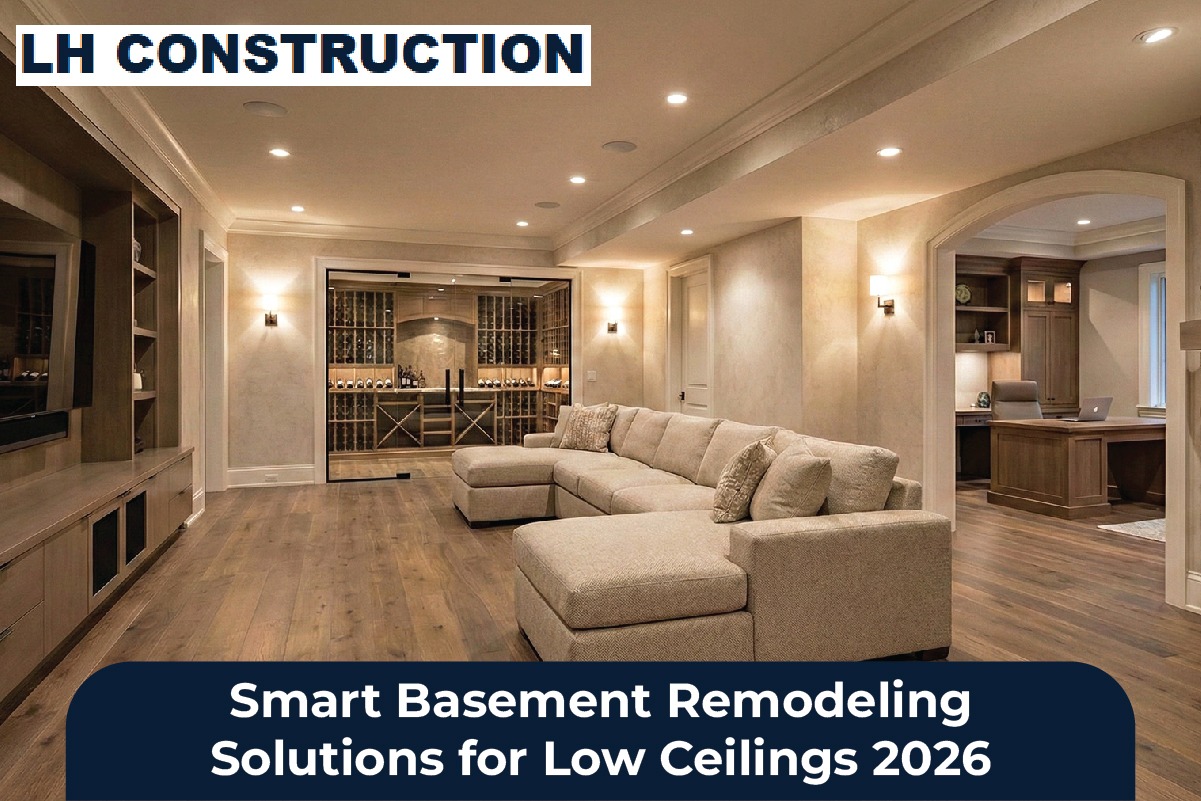
If you’ve ever walked into your basement and felt like the ceiling was hovering just a little too close to your head, you’re not alone. Low ceilings are one of the most common challenges homeowners face during a basement renovation. However, here’s the good news — low height doesn’t mean low potential. In fact, with the right approach, a basement with limited vertical space can feel just as open, functional, and stylish as any other part of your home.
In 2026, basement remodeling is all about smart planning, modern finishes, and space-saving design. Homeowners aren’t just finishing basements anymore; they’re transforming them into home offices, guest suites, entertainment rooms, and even rental spaces. The key lies in choosing the right basement ceiling solutions, lighting strategies, and layout improvements that visually expand the space without requiring major structural changes. Let’s explore how to turn your low basement ceiling into a design advantage instead of a limitation.
Understanding the Challenge of Low Basement Ceilings
Before jumping into design upgrades, it’s important to understand why low ceilings feel restrictive. Most older homes were built with basements intended for storage, not living space. As a result, ceiling heights often range between 7 and 8 feet — sometimes even lower after ductwork and plumbing are installed.
Fortunately, smart basement remodeling ideas now focus on working with what you have instead of fighting it. Rather than lowering the floor (which can be costly and complex), homeowners are exploring creative basement ceiling height solutions that improve visual space while maintaining structural integrity. With thoughtful planning, you can create a basement that feels open, airy, and modern.
Open Ceiling Concepts: Embrace the Industrial Look
One of the most effective low-ceiling basement ideas is to expose the ceiling instead of covering it. By painting ductwork, beams, and pipes in a single neutral color — often white, black, or gray — you create visual continuity that makes the space feel taller.
This approach is especially popular in modern basement renovation projects. Instead of installing bulky drywall or traditional drop ceilings, homeowners are choosing open ceiling concepts that add character while preserving every inch of height. Not only does this solution feel contemporary, but it also provides easy access to wiring and plumbing for future maintenance.
Smart Basement Ceiling Solutions That Save Height
If an exposed ceiling isn’t your style, there are still several basement ceiling solutions that won’t eat up precious inches. Thin drywall installations, beadboard panels, and sleek wood planks offer a finished look without excessive bulk.
Additionally, many homeowners are now choosing drop ceiling alternatives such as surface-mounted grid systems or low-profile ceiling panels. These systems provide accessibility while minimizing vertical loss. When combined with thoughtful color choices and clean lines, they create a streamlined aesthetic that enhances the room’s overall openness.
Lighting Strategies That Visually Lift the Ceiling
Lighting plays a critical role in how a basement feels. Poor lighting can make ceilings seem lower than they actually are. On the other hand, smart basement lighting ideas can dramatically open up the room.
Recessed lighting, also known as can lighting, is one of the best solutions for low ceilings because it doesn’t hang down into the space. Wall sconces, LED strip lights along beams, and uplighting techniques also draw the eye upward. By distributing light evenly and eliminating shadows, you create the illusion of greater height.
Furthermore, layered lighting — combining ambient, task, and accent lighting — enhances depth and dimension. In small basement makeover projects, this strategy often makes a bigger impact than structural changes.
Space-Saving Basement Design for Multi-Use Rooms
In 2026, basements are rarely single-purpose spaces. Homeowners want flexibility, whether it’s a home gym that doubles as a media room or a guest suite with built-in storage. That’s where space-saving basement design becomes essential.
Built-in shelving, wall-mounted desks, and multifunctional furniture help maximize usable square footage. Vertical storage systems keep clutter off the floor, which visually expands the room. When planning basement finishing ideas, think about how each element serves more than one function.
Additionally, open floor plans tend to work better in low-ceiling basements. Avoiding unnecessary walls allows natural and artificial light to travel freely, making the area feel larger and less confined.
Flooring Choices That Enhance Visual Height
Believe it or not, flooring can impact how tall your basement feels. Lighter flooring materials, such as light-toned vinyl planks or engineered wood, reflect more light and make ceilings appear higher.
Continuous flooring throughout the basement also improves flow. Avoid abrupt transitions that visually cut the room in half. Instead, aim for seamless materials that create unity. When combined with coordinated wall colors, this technique enhances overall spaciousness.
Many finished basement ideas now prioritize minimalist flooring patterns to prevent visual clutter. Clean lines and subtle textures contribute to a more expansive atmosphere.
Color Psychology and Wall Treatments
Color selection is another powerful tool in modern basement renovation. Light, neutral shades like soft whites, warm grays, and muted beiges help bounce light around the room.
Vertical wall paneling or subtle striped wallpaper can also create the illusion of height. By drawing the eye upward, these design techniques compensate for physical limitations. Mirrors strategically placed across from windows or light sources further enhance this effect.
Moreover, keeping trim and ceiling colors consistent reduces visual breaks. This cohesive look makes the ceiling blend smoothly with the walls, minimizing the boxed-in feeling that low ceilings sometimes create.
Concealing Ductwork and Structural Elements Creatively
Ductwork and beams often create awkward drops in basement ceilings. Instead of hiding them awkwardly, incorporate them into your design.
Soffits can be styled intentionally to frame specific zones, such as a home theater or bar area. Alternatively, wood wrapping or sleek paneling can transform beams into architectural features.
When exploring basement remodeling ideas, it’s important to treat structural constraints as opportunities for creativity rather than obstacles. Thoughtful integration enhances both form and function.
Planning for Comfort: HVAC and Insulation
Low ceilings can sometimes trap heat or make airflow feel restricted. Therefore, proper insulation and ventilation are critical. Slim-profile HVAC systems and well-placed vents maintain comfort without consuming excess space.
Soundproof insulation is also worth considering, especially if your basement serves as an entertainment room or office. Modern materials provide thermal efficiency without requiring thick ceiling assemblies.
By prioritizing comfort alongside design, your basement becomes not just usable, but enjoyable year-round.
Budget-Friendly Smart Remodeling Tips for 2026
Not every basement remodel requires a massive investment. Many low ceiling basement ideas can be implemented on a modest budget.
Painting ceilings, upgrading lighting fixtures, decluttering storage, and installing modular shelving systems provide high impact with low cost. Additionally, planning your layout carefully prevents costly redesigns later.
If you’re unsure where to start, consulting with remodeling professionals ensures you make informed decisions that align with both your goals and your home’s structural limits.
Final Thoughts:
A low ceiling doesn’t mean you have to settle for a dark, cramped basement. In fact, 2026 design trends prove that smart planning, thoughtful lighting, and strategic finishing choices can completely transform the space. By combining innovative basement ceiling solutions with practical space-saving basement design techniques, you create a room that feels intentional, modern, and comfortable.
Whether you’re planning a full remodel or simply exploring basement finishing ideas, remember this: height is only one dimension of design. Creativity, smart layout decisions, and modern materials matter just as
FAQ
What is the minimum ceiling height for a finished basement?
Most building codes require at least 7 feet of ceiling height for finished living spaces, though requirements may vary by location.
Can I raise my basement ceiling?
Technically yes, but lowering the floor (underpinning) is expensive and complex. Most homeowners opt for creative basement ceiling height solutions instead.
What lighting works best in low ceilings?
Recessed lighting, LED strips, and wall-mounted fixtures are ideal because they don’t hang down into the space.
Are drop ceilings a good idea?
Traditional drop ceilings can reduce height, but modern drop ceiling alternatives offer sleeker, low-profile designs.
How can I make my basement feel bigger?
Use light colors, open layouts, smart lighting, and minimal furniture to enhance the sense of space.